
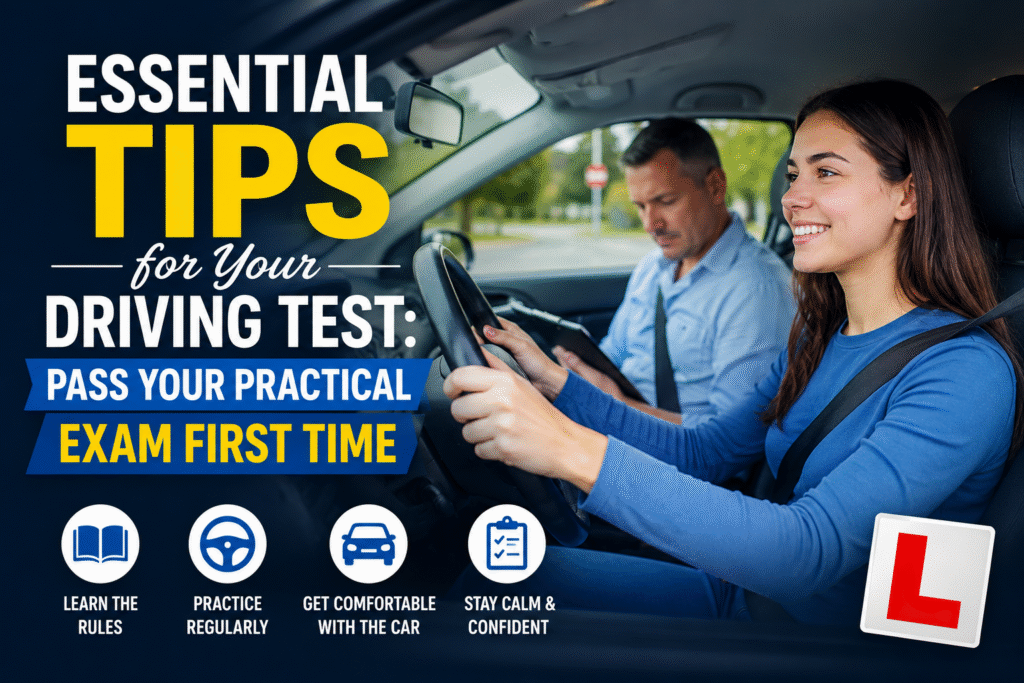
The build-up to your practical driving test can feel like an emotional rollercoaster, blending the exciting anticipation of road freedom with the natural stress of being formally evaluated. However, turning this nervous energy into a calm, focused performance is completely achievable when you back up your hard work with proven testing strategies. Implementing elite tips for driving test preparation allows you to step into the exam center with a clear mind and control your vehicle with confidence. Examiners aren’t looking for robotic perfection; their primary goal is simply to ensure you are a safe, predictable driver who poses no hazard to other road users. At RBD Driving School, we specialize in transforming nervous learners into highly capable, test-ready drivers.
A successful first-time pass requires preparing for every single phase of the examination journey, from your early theory revision straight through to your final independent driving route. Let us break down the absolute best tips to pass driving test day smoothly, combined with key insights to ace your initial theory evaluation.
Rushing your training to save money often leads to failed tests, which costs you significantly more in extra booking fees and long wait times. By understanding how the national average is calculated and identifying the factors that speed up your learning curve, you can plan an optimized training strategy. Let us look at data-driven insights and professional timelines to map out your personal road to independence.
Many learner drivers fall short on test day not because of poor driving mechanics, but because they overlook minor administration rules or missing paperwork. By taking a proactive approach and double-checking your paperwork early, you ensure that you do not face a stressful last-minute cancellation. Let us walk step-by-step through an authoritative checklist driving test structure to ensure you arrive at the examination site completely prepared, confident, and ready to pass.
You cannot book your practical exam without first passing your theory assessment, which makes this step a crucial foundation for your overall training. To avoid getting tripped up by complex multiple-choice questions or tricky hazard perception clips, use these specialized driving theory test tips to maximize your score:
Every learner driver processes spatial mechanics, hazards, and mechanical controls at their own pace. A student who practices regularly on quiet suburban streets with their parents will naturally progress through their professional syllabus much faster than a student who only drives for one hour a week. Your focus should always be on reaching a point where safe driving habits become automatic instincts, rather than hitting an arbitrary number of hours.
Once your theory certificate is secured, focus shifts entirely to polishing your physical behind-the-wheel performance. These practical tips to pass driving test day are designed to keep your errors to an absolute minimum and demonstrate clear, safe control:
The independent portion of the exam takes up roughly twenty minutes of your drive, requiring you to navigate unfamiliar routes using a sat-nav or by following road signs. This phase often causes stress, but keeping a few key habits in mind makes it incredibly manageable.
The final 24 hours before your practical test should be focused on rest, mental preparation, and building your confidence. Avoid cramming intensive practice sessions late into the evening, as this will leave you feeling drained.
Passing your practical assessment on the first attempt isn’t about luck; it comes down to applying solid tips for driving test day, maintaining your focus, and trusting your training. By mastering your driving theory test tips early and polishing your in-car routines, you can step up to the test center ready to succeed.
At RBD Driving School, we provide top-tier preparation that covers every single aspect of your driving journey. Our dedicated instructors are completely committed to helping you pass with flying colors. Connect with us today to book your practice sessions and pass with absolute confidence.